An unexpected opportunity
“I heard about what you did down there.”
One morning, Frank Mayer, our company’s Chairman of the Board, invaded my office and seized the chair across from my desk. As approachable as Frank was, he never dropped in like that. My surprise would transform to terror. As was his trademark, he got directly to the point, “I think you should write your experiences down from Mexico for publication in our company’s newsletter. Let everyone know it isn’t always all about business.” “I went to Art School, Frank. I never wrote anything in my life.” “It is a story that needs to be told, Ed”.
The company where I was a Designer, Project Team Leader and ultimately head of Creative Operations is called Frank Mayer & Associates, Inc. We had a strategic partner in Mexico City called APTO/FrankMayer.
In 2001 our President, Mike Mayer and I would attend a special ten-day business class at the Cuauhnahuac Language Institute in Cuernavaca, Mexico. Our goal was learning politeness and business etiquette to facilitate our Latin American client meetings and in my case, a little Spanish as well.
After our return, the stories of my exploits began to circulate around the company and to Frank’s ears. I was completely humbled by what happened and I didn’t want anyone to misunderstand this tale as a vehicle for self-promotion. My emotions ran from elation to deep sadness, but this nudge to write ultimately became a new creative outlet for me that I continue to cultivate to this day. That was how this story was born.
At the trip orientation, I knew straight away we would have the opportunity to visit an orphanage. It is an annual tradition with the Milwaukee Area Technical College (MATC) group we would be traveling with. I told the group leader I had clowning skills and asked about any potential cultural road blocks. Her face erupted with joy; she was ecstatic about having a payaso (clown) to entertain the children. Then, she dropped her voice an octave and said, “You will be a hero.” I laughed and said, “Hero? Clowns aren’t heroes; we just try to make people smile”. I didn’t hesitate to volunteer, but contemplating the idea of a first-time trip to an orphanage saw my resolve leak with trepidation. In a parade you are simply part of all the activities, but I would be the singular focus at the orphanage and she would be right about the role I would play in the lives of those children.
I started clowning with my wife, Kristin and Mrs. Jeager in Sheboygan’s 4th of July parades. Mrs. Jeager had been Kristin’s Girl Scout Leader and her children were our generation. She did fifty parades. Later, our clowning became something cool to do with our two sons. We did our own thing with our faces for a while. The images of our first attempt at characters were naïve, but heartfelt. Think Gene Simmons from the band Kiss. I roller skated the first few times so no one could get a good look at me. It wasn’t long before we decided to take a makeup class. Ultimately, we discovered Clown Camp in La Crosse, Wisconsin. There were thirty-three states and six foreign countries represented. We stayed for an entire week studying; parade technique, physical humor, props, discovering our personalities, and designing our faces.
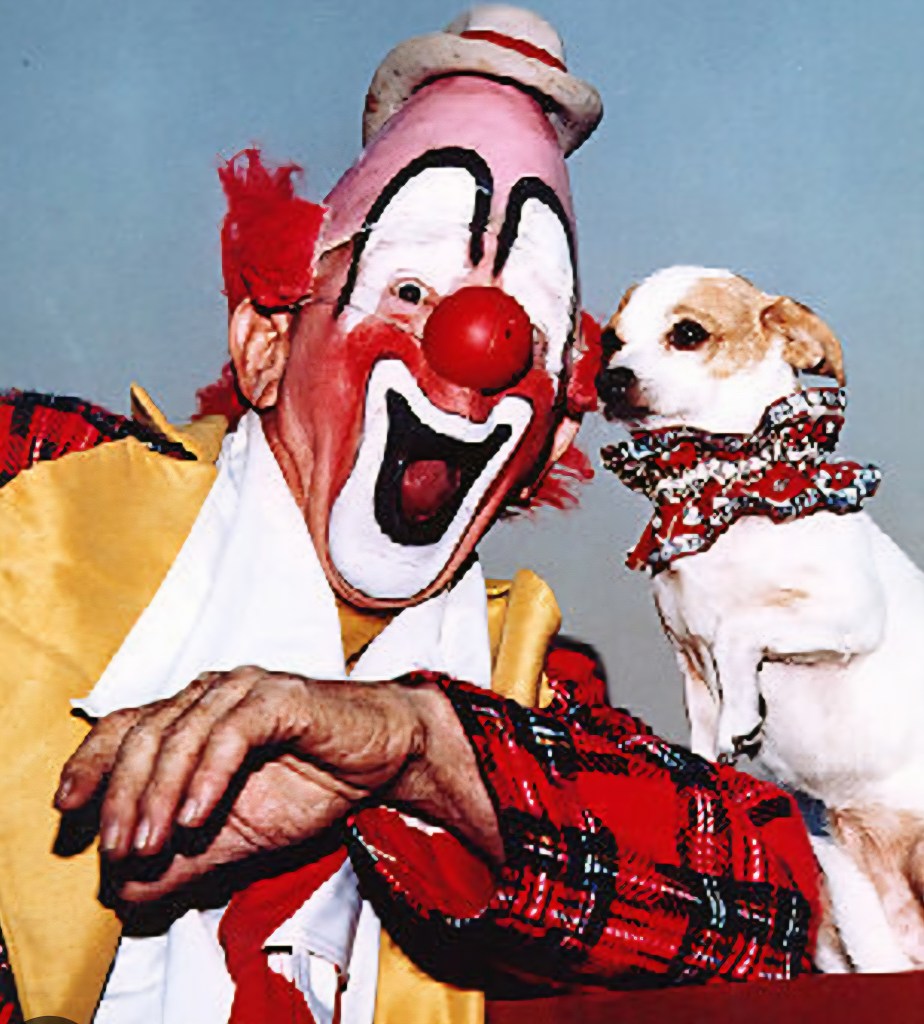
There were five Hall of Fame clowns included on the staff to teach classes and help with our faces. Jim Howle helped design mine. He had me come in with only half my face done, and he rendered the other side, a spectacular teaching method. Jackie LeClaire, who was the stunt double for Cornel Wilde in the Greatest Show on Earth, sort of adopted us. We were the first family to attend Clown Camp and he loved children. He shared wonderful stories about some of the great circus clowns from the hay-day of the Ringling Brothers. For Lou Jacobs, perhaps the most recognizable, he said, “Everything Lou did was BIG.” That statement resonated with me and became part of my performances.
Magic does happen when you make yourself available.
I have to say a few things about being a clown. Nobody can put on my big shoes and not smile. For me, something happens in the transition. I can’t tell what exactly, but the costume for me is a permission, an invitation to open your soul, a conduit to be spontaneous and create joy and happiness. Language, race and culture are not barriers. I’ve done things physically and expressively that are totally unplanned and difficult to explain or repeat. While in costume, even while going to and from a performance, I stay in character. You never know when a child may see you. I won’t take off my costume or come out of character until I’m at home. I consider my clown activity a hobby, but I take it seriously, it’s a big responsibility.
Cuauhnahuac Spanish Language Institute is perched along the flanks of a large tropical ravine. The administration buildings are across the upper edge with a pool. The student commons in the middle, and with the quaint cinder block classrooms covered by corrugated metal roofs across the lower reaches in an organized queue. The curriculum ranges from our ten-day program with language and cultural experiences available from six to twelve months of complete immersion into the language. I found the atmosphere totally relaxing until I went to classes. I had irregular verbs in the morning and conversation in the afternoon, just myself and the instructors. No other students to shield my ignorance. I hadn’t been in school for twenty-seven years. Horror comes to mind as I recall the instructor saying,” Eduardo, no ingles (English)”. But by week’s end, I could begin to converse in Spanish. The instructors were very patient with me and I can only imagine what I could have learned from an extended stay in such an enabling environment.
The orphanage
We had two busloads of people from our MATC group and the language school who wanted to spend time with the children. I was the only one with big shoes and orange hair, but everyone who participated brought a special day to the kids, all of them bringing valuable moments of human kindness.
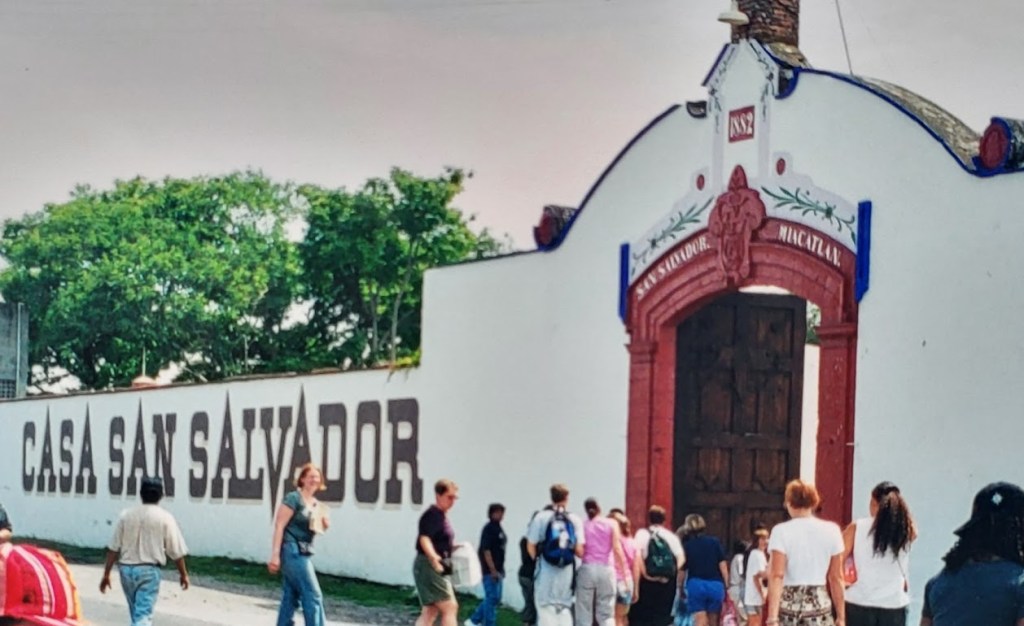
Casa San Salvador (House of Salvation) is a large walled complex. The wall is not to keep the children in, but to protect them from the outside. There were 350 kids living there. All of these children were abandoned somewhere along the line and were lucky enough to find their way to this sanctuary. All of the children stay there till they are eighteen years old. No children are adopted out so the family units stay together offering a social foundation. None of the children had seen a live clown before and for the younger ones, I would be their only focus. This is what I meant by big responsibility, I simply had to be present and open my soul.
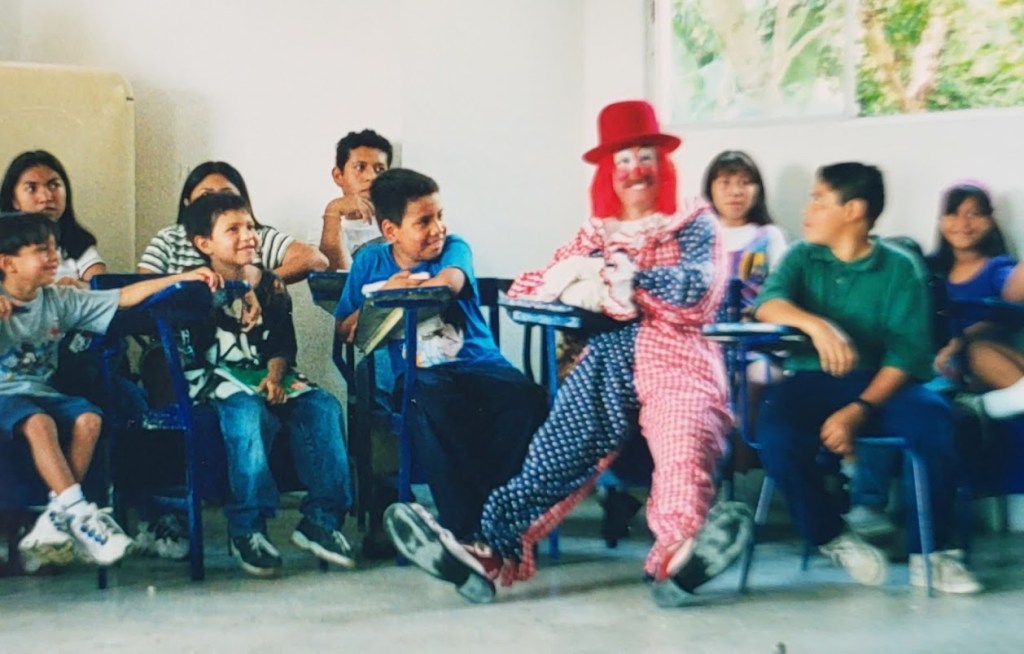
We saw three groups of kids, a total of about ninety. The first bunch were mixed ages between nine and fourteen. The younger ones collected the bulk of my camera stickers (an over-sized prop camera that produced ‘I met a clown today’ stickers) while our group spread out with the other kids and played basketball, drew with chalk on the playground or played games. Most teenagers on the planet will shy away from clowns. They occupy that zone between myths and reminisce and I’m cool with that. The energy in a crowd will tell me where to focus my attention.
The second group of kids we saw received the fifty-plus stuffed animals we had brought with us from the USA. Politics, red tape, and potential confiscation prevented us from shipping the soft toys directly to the orphanage so several of us volunteered to take an extra suitcase through customs. People coming into the country are checked at random. We wondered what to say to the customs agent about a suitcase full of stuffed animals, but I was prepared with a secret weapon and a Spanish response. Our partnership with APTO/Frank Mayer enabled me to meet Adrian Fernandez the famous Mexican race driver. I placed the photograph of Adrian and me on top of the stuffed animals in the suitcase. Thankfully, I was the only one pulled aside. When the customs agent saw the picture he said, “You know Adrian Fernandez?” and I said, “Si, es amigo mio.” (Yes, he’s a friend of mine.) He jerked his thumb and said, “Vamonos.” (Go.)
I’m told I looked like the Pied Piper.

As we passed out the stuffed animals, I balanced one on top of my hat just to be silly. Once the kids saw that, they all ran up and wanted me to do the same for them. I didn’t stop until all the stuffed animals had been on my hat and yes, some of the kids came back for a second turn. It was great fun. Many just stared and smiled. It was enough for me to simply be present. I moved like a mother goose with all her goslings clinging to her like a bunch of grapes. It felt like ten minutes, but we had really been at the orphanage for over two hours so our time was coming to a close. I said goodbye to all my new friends and hugged as many as I could. As we all crossed the large courtyard I would turn and wave.
Suddenly, a young man ran up to me and said, “Please, senior, you must come back, there is one more group of children expecting to see the payaso and they have been waiting…” I could see the group of kids peering from around a corner about eighty yards away. They were the five and six-year-old’s. I looked at our group leader who had overheard the plea. I held up my hands gesturing my wish to return; she understood holding up ten fingers. I had a sudden unexpected rush of adrenaline, I jumped and spun around in a huge motion understanding in an instant that the kids could see me. I couldn’t just walk over there so I channeled Lou Jacobs. I began to leap across the courtyard in gigantic lopes. It felt like I’d left the ground by ten feet being carried by some numinous presence, I was Tigger. The kids saw me of course and emptied out from behind the building. They were yelling, “payaso, payaso” as they surrounded me. There must have been twenty kids.
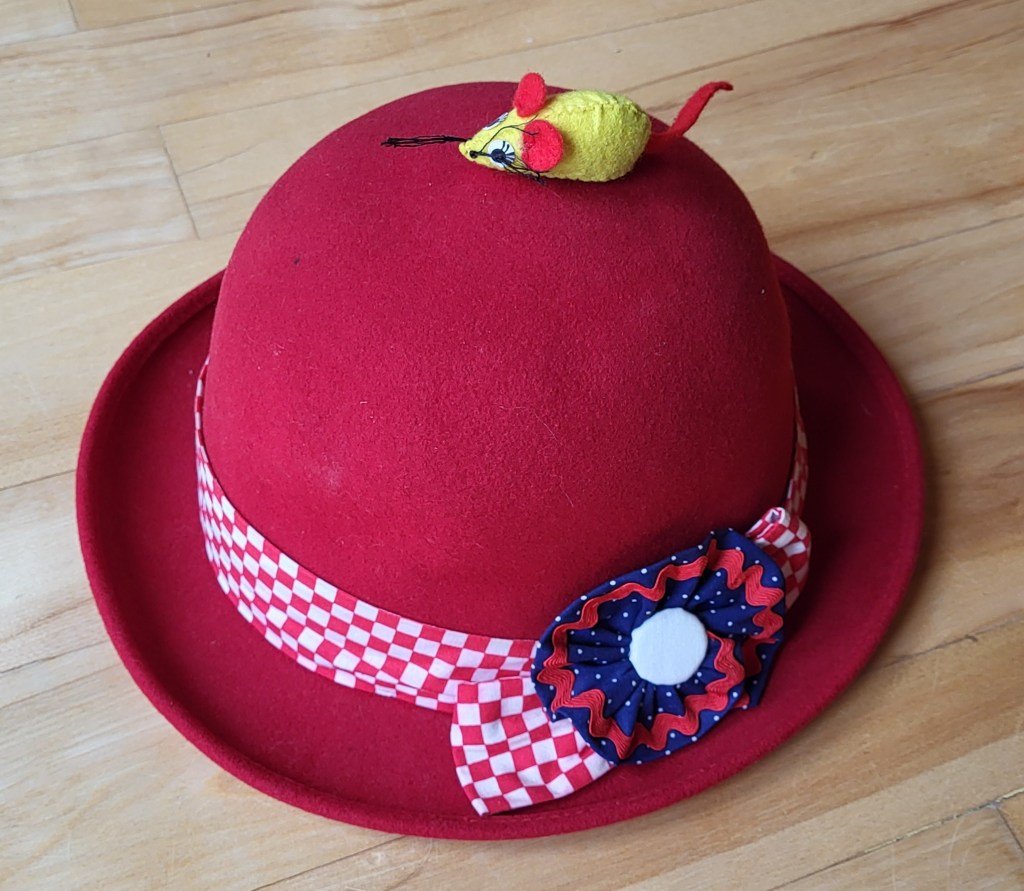
My clown name for this character was, Toofer. I had a yellow mouse on my hat. If a kid said, “That’s silly name.” I would say in a dopey clown voice, “See the little mouse? It rides up there cause it’s Too-fer to jump.” That always got laughs and groans. In clown lore, a groan is worth two laughs. It never failed. But in Spanish, the name didn’t translate so one of the administrators at the school gave me a new name.
There is a saying; The eyes of a clown are the windows to his soul. I was acutely conscious of that as I looked into the beautiful, inquisitive brown eyes all these children. They were like a bundle of brown fireflies. The only things these kids wanted to know was my name and if I was real. (Cual es su nombre? Es usted verdadero?) With swinging hand gestures and pointing at my nose, I bowed and said softly, “Mi nombre es Nariz Roja.” (My name is Red Nose.) I got down on one knee and they all gently touched my nose, hair, and hat and shook my hand with their faces beaming. I made sure I had eye contact and acknowledged each of them. The outpour of affection from these kids stunned me. Again, it was just about being present. They weren’t looking past the suit at the man; I was a real clown. The first one they had ever seen. In that moment clowning was no longer a hobby; it was a gift to these children that they will probably never forget. I did my best to be a good steward of the responsibility, but it was time again to say farewell, I did one of my silly clown walks backwards until they were out of sight.
I strolled back to the bus alone with my thoughts and feelings, proud to have been part of the MATC tradition with my fellow students and of the joy we brought to the children. As a clown, I wished I could have given even more to these kids who have so little. I was humbled by the divine assistance I received to perform as I did and quietly wondered if I was worthy. I was grateful that professionally applied makeup doesn’t come off with tears on it.
 The Adventures of Spaghetti Eddie
Gre
LikeLike
Social hour tonight. I’ll try to join. Sometimes, Grandpa duties intervene. Sent from my iPad
LikeLike